 ⭑ Popular
 4.97 ★★★★★ (468)
Flexible Weekend Plant Medicine Retreat in Culemborg
Culemborg, Netherlands
MindTravellers
Compare vetted ayahuasca & plant-medicine retreats — with real reviews, available dates and personal guidance.
The most booked and best-rated retreats in our community
⭑ Popular 
 ⭑ Top rated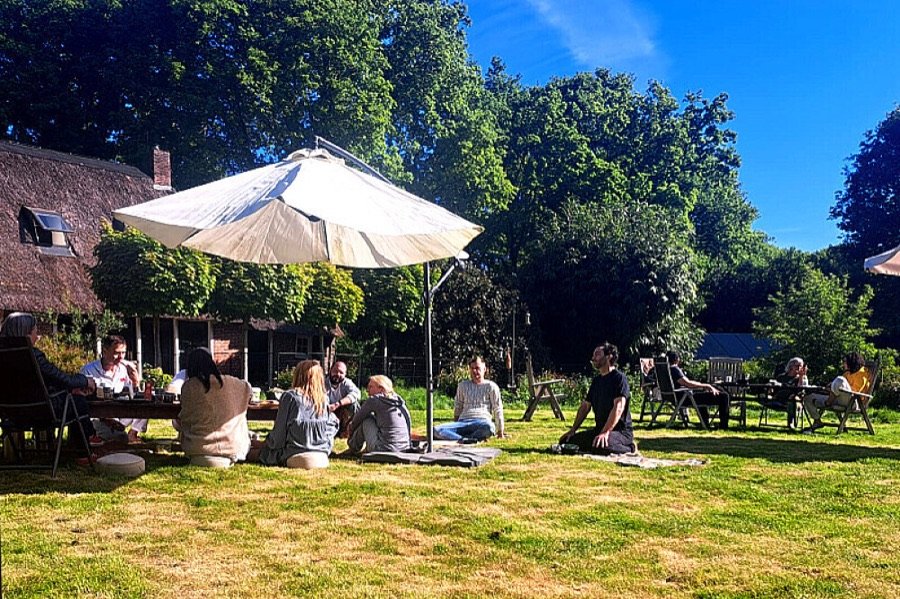
We vet every retreat center for experience, safety standards and professional facilitation before it appears on our platform.
Every bookable retreat takes place in a country where the ceremonies on offer are legally permitted – transparent, with no grey-area risk for you.
Not sure which retreat suits you? Our team offers free, no-obligation advice by phone or email and helps you choose with confidence.
You never pay more than booking directly with the organizer, and most retreats can be cancelled free of charge until shortly before the start.
Looking for an ayahuasca retreat in Germany or within easy reach of it? On this platform you can compare vetted providers of ayahuasca ceremonies and plant medicine retreats – with genuine reviews, transparent details on safety, facilitation and group size, and free guidance to help you choose. We show you which retreats operate professionally and why most legal ceremonies take place just a few hours across the German border.
If you search for an ayahuasca retreat in Germany, you will quickly run into a sobering reality: legal ceremonies with the traditional Amazonian brew are practically non-existent here. The reason is legal. Ayahuasca contains DMT (dimethyltryptamine), which is listed in Schedule I (Anlage I) of the German Narcotics Act (BtMG) as a prohibited substance. Producing, possessing or distributing it is a criminal offence, regardless of whether the brew is used in a spiritual or therapeutic context.
A grey-zone scene does exist in Germany: private underground ceremonies, often without medical screening, trained facilitation or an emergency plan. Experienced facilitators explicitly warn against these settings – if something goes wrong, physically or psychologically, there is neither professional help nor any legal protection.
Reputable providers working with German-speaking participants have therefore chosen a different route: they run their retreats where ceremonies with psychoactive plants are possible within a clear legal framework – above all in the Netherlands. For you, this means a safe, well-facilitated ayahuasca retreat is entirely within reach from Germany, just usually not on German soil. Since laws can change, we recommend checking the current legal situation in the relevant country before booking.
The Netherlands has become Europe’s leading destination for plant medicine retreats. The reason is a peculiarity of Dutch law: psilocybin truffles are legally available there and may be used in a facilitated setting. Many retreat centres therefore work with so-called psilohuasca ceremonies – a combination of psilocybin truffles and plant-based MAO inhibitors that comes very close to a classic ayahuasca experience in depth and duration, and which many participants describe as equally transformative.
Important to know: classic DMT-based ayahuasca is restricted in the Netherlands too. In 2019, the Dutch Supreme Court (Hoge Raad) ruled that importing ayahuasca is not permitted even for religious communities such as the Santo Daime church – public health outweighs religious freedom. Serious Dutch centres therefore rely on legal alternatives like psilohuasca and communicate this transparently instead of obscuring legal risks.
Getting there from Germany is easy: many retreat venues are only one to three hours by car from the German border. Add to that a mature professional infrastructure – experienced facilitators, established screening processes, German- or English-speaking guidance and centres that have been holding ceremonies for years. An ayahuasca retreat in the Netherlands combines legal clarity with a level of professionalism that Germany currently cannot offer.
A well-run ayahuasca ceremony begins long before the actual evening. Reputable providers start with a medical and psychological screening: you fill in a questionnaire about pre-existing conditions, medication and your mental health, often followed by a personal intake call. This screening is not bureaucracy – it is the single most important safety instrument, and any provider who skips it is not working professionally.
On the ceremony evening itself, everything revolves around set and setting: your inner state and the outer environment. Ceremonies usually take place in a quiet, protected space, often by candlelight, with a mattress or mat for each participant. Experienced facilitators – in well-run centres roughly one guide per four to six participants – hold the space and step in supportively when someone moves through a difficult moment. Music plays a central role: traditional icaros (healing songs), live instruments or curated playlists accompany and structure the experience over several hours.
Group sizes vary widely, from intimate circles of six to ten people to groups of twenty or more; smaller groups generally mean more individual attention. After the ceremony comes a rest phase and, the next day, a sharing circle to voice and process what happened. A typical ceremony evening looks like this:
Preparation ideally starts two to four weeks before the retreat, and its core element is the so-called dieta. Most centres recommend avoiding alcohol, heavily processed food, excess salt and sugar, red meat and often sexual activity and agitating media in the days or weeks before the ceremony. Especially important are tyramine-rich foods such as aged cheese, soy sauce and fermented products, which can be problematic in combination with MAO inhibitors. Every serious retreat will give you a specific list.
The topic of medication is absolutely critical: antidepressants (especially SSRIs and MAO inhibitors), certain pain and migraine medications and several other substances can cause dangerous interactions with ayahuasca or psilohuasca. Never stop taking medication on your own – talk to your doctor first and inform the provider fully and honestly about everything you take.
Inner preparation matters just as much: formulate an intention – a question or theme to carry with you. Many participants report that a clear intention gives the experience direction and depth. Journaling, meditation and time in nature help you arrive calm and open.
Honesty is essential here: an ayahuasca retreat is not for everyone. Clear contraindications include a personal or close-family history of psychosis, schizophrenia, bipolar I disorder and serious cardiovascular conditions. Taking SSRIs or other serotonergic medication usually also rules out participation unless paused under medical supervision. If any of this applies to you, speak to a doctor or psychotherapist first – and be wary of any provider willing to accept you without asking questions.
Realistic expectations matter just as much. Ayahuasca is not a miracle cure and no substitute for psychotherapy. Many participants report profound insights, emotional clarity and a changed perspective on old patterns – but a single ceremony rarely resolves years of accumulated issues, and the experience itself can be challenging. A plant medicine retreat is a good fit for mentally stable adults who are willing to look at themselves honestly, take preparation seriously and commit to integrating the experience afterwards.
Quality varies enormously between providers, and the differences are hard to spot from the outside. Look for five criteria: a mandatory medical and psychological screening before booking; the facilitation ratio, since smaller groups per guide mean better individual support; the team’s experience and training; an integration offer such as sharing circles or follow-up sessions, because the real work often starts after the retreat; and the ceremony language – make sure you can express yourself comfortably in German or English.
This is exactly where our platform comes in: we compare retreats against these criteria, gather genuine reviews from past participants and show transparently what to expect from each provider – from group size and screening to integration support. Instead of a gut decision based on pretty website photos, you make an informed choice. And if you have questions, our free guidance helps you find the retreat that fits your situation.
To sum up: there is currently no legal ayahuasca retreat in Germany – DMT remains prohibited under the BtMG, and underground ceremonies are a risk not worth taking. The good news: just a few hours away, in the Netherlands, you will find an established, professional retreat landscape with legal psilohuasca ceremonies, experienced facilitators and clear safety standards.
Whether it is your first ayahuasca experience or you already know ceremonies: take your time choosing, prepare carefully, clear up medical questions with a doctor and plan your integration from the start. Compare the vetted retreats on our platform now and find the ceremony that fits you – safe, legal and well facilitated.
No. DMT-containing preparations such as ayahuasca fall under the Narcotics Act in Germany. Legal, professionally guided alternatives (e.g. psilocybin truffles) are available in the Netherlands, just a few hours away.
Most centres are on good rail links and pick you up from the nearest station. Each retreat page shows the exact route and travel time from Germany.
You send a non-binding enquiry; the provider usually responds within 24 hours with a personal intake call and a medical questionnaire. Only then is your place confirmed.